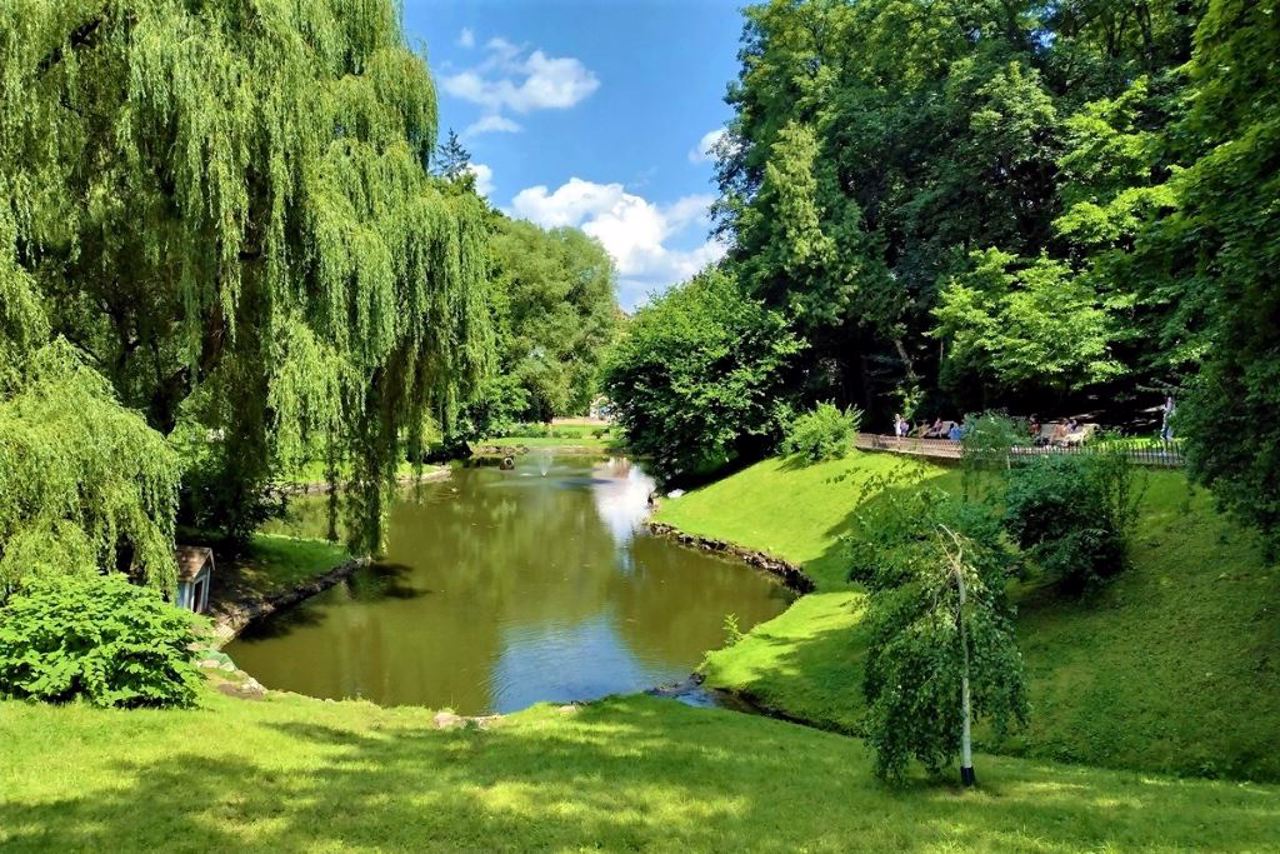
Stryiskyi Park
Lviv, Ukraine
One of the oldest and most picturesque parks in Lviv, Stryiskyi Park
offers a harmonious blend of history, landscape design, and biodiversity. Its scenic terraces, ponds, and shaded paths create an inviting space for relaxation, cultural events, and nature appreciation at the edge of the city centre.
PARK INFO
- Access: Free
- Type of Park: Historical Urban Park
- Size: Approx. 560,000 m²
- Governance: Managed by the Lviv Town Hall
Access: Open 24 hours, no entry fees or restrictions.
Facilities: Benches, ponds, open lawns, shaded walkways, and recreation areas.
Inclusive Design: Features wide, flat paths and terraces suitable for all visitors, including those with reduced mobility.

Educational & Community Value
Environmental Education Activities
Informative signage and guided walks occasionally organised by local institutions introduce visitors to the park’s trees, landscapes, and heritage.
Non-formal Learning Examples
Frequent fairs, exhibitions and outdoor events encourage public interaction with the park’s cultural and environmental aspects.
Cultural/Historical Significance
Created in the late 19th century for the Galician Regional Exhibition, Stryiskyi Park remains a historic landmark representing Lviv’s dedication to urban green culture and European park traditions.
Youth Engagement / Community Use
Popular among students, families and tourists for walking, social gatherings, and seasonal festivals.
Biodiversity & Natural Features
Notable Flora/Fauna: Around 200 tree and shrub species; ponds, grassy terraces, and artificial wetlands support local birds, insects and small wildlife.
Nature Protection Status: Not part of the Natura 2000 network, but a designated municipal green heritage area.
Green Infrastructure Elements: Shaded paths, water features, terraces, meadows and mixed forest types that enrich the city’s ecological diversity.
Map of the park
Here’s a map of The Stryiskyi Park. Use it to plan your trip to make sure you don’t miss anything
Gallery